
You forget who someone is
A name comes back mid-chapter and you’ve lost track of who it is.
Tap it. A short card appears; close it and you’re still on the same line.
You don’t lose your place.
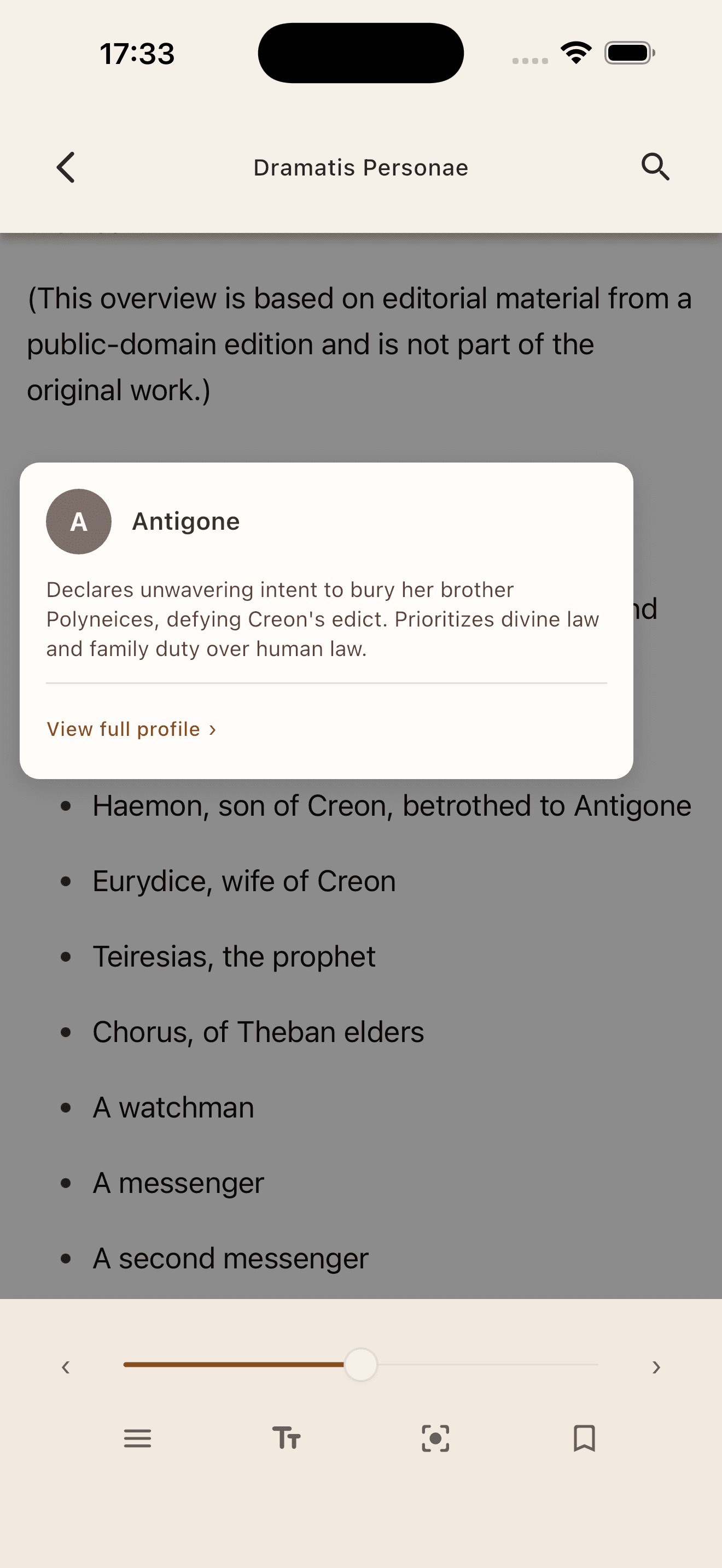
Names blur. You reread a line. You leave to search—and the thread you were holding slips.
BetterReads keeps you inside the book. Ask and clarify there, instead of breaking into a spiral of tabs.


You don’t have to leave the book to understand it.
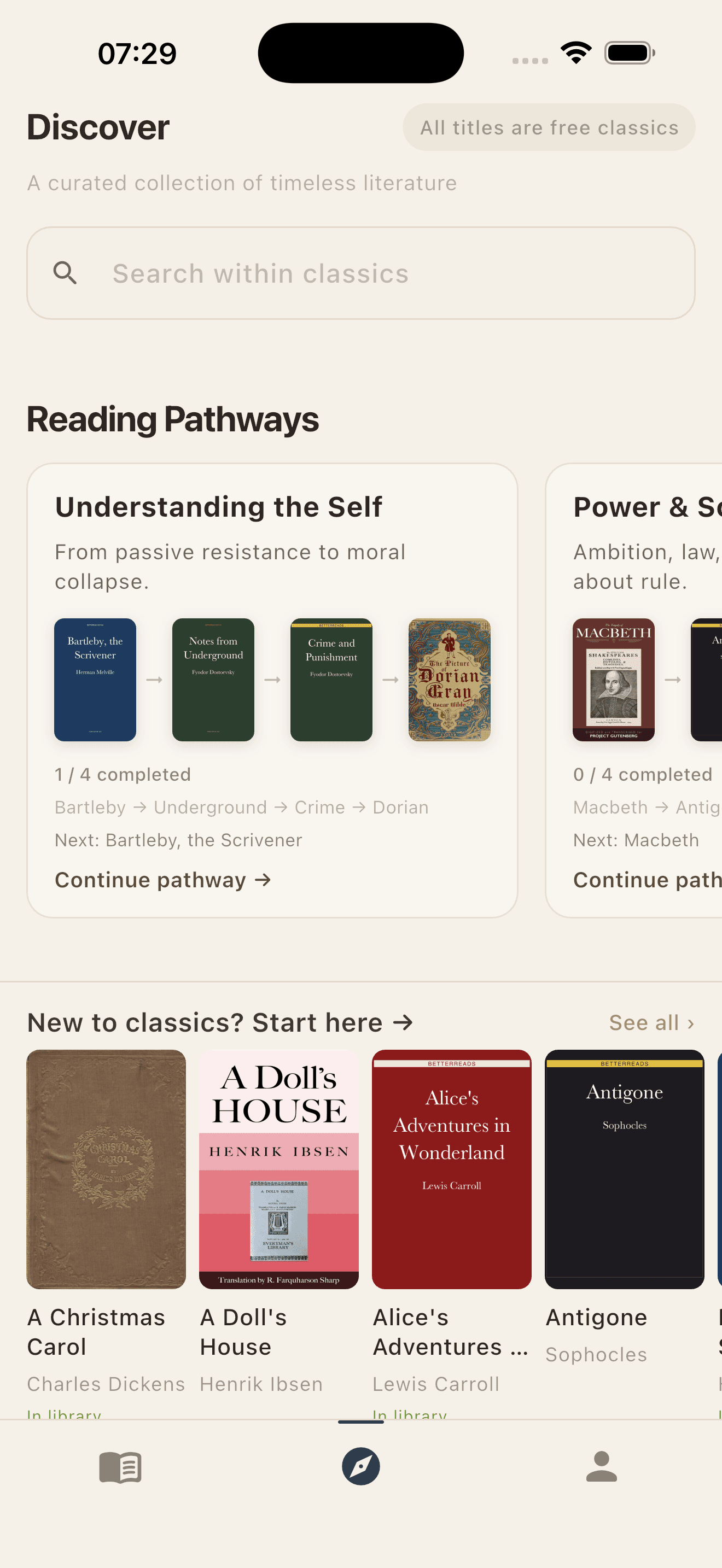
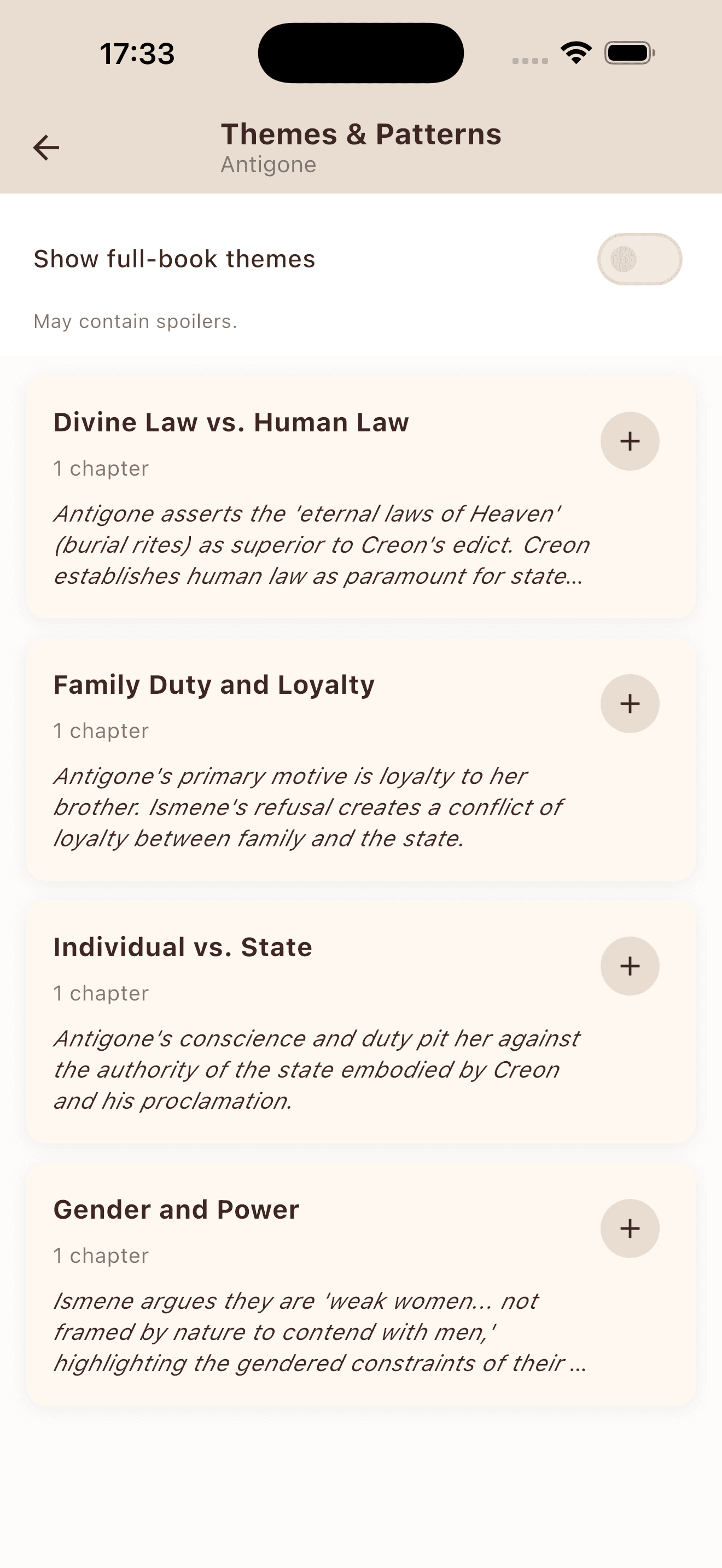
Stay in the page for people, lines, and recurring ideas—without rebuilding the book in your head.
A name comes back mid-chapter and you’ve lost track of who it is.
Tap it. A short card appears; close it and you’re still on the same line.
You don’t lose your place.
The words are on the page; the sense won’t land.
Highlight what’s stuck and ask in the reader—no perfect question, no leaving the page.
The answer opens beside the text; you keep going.
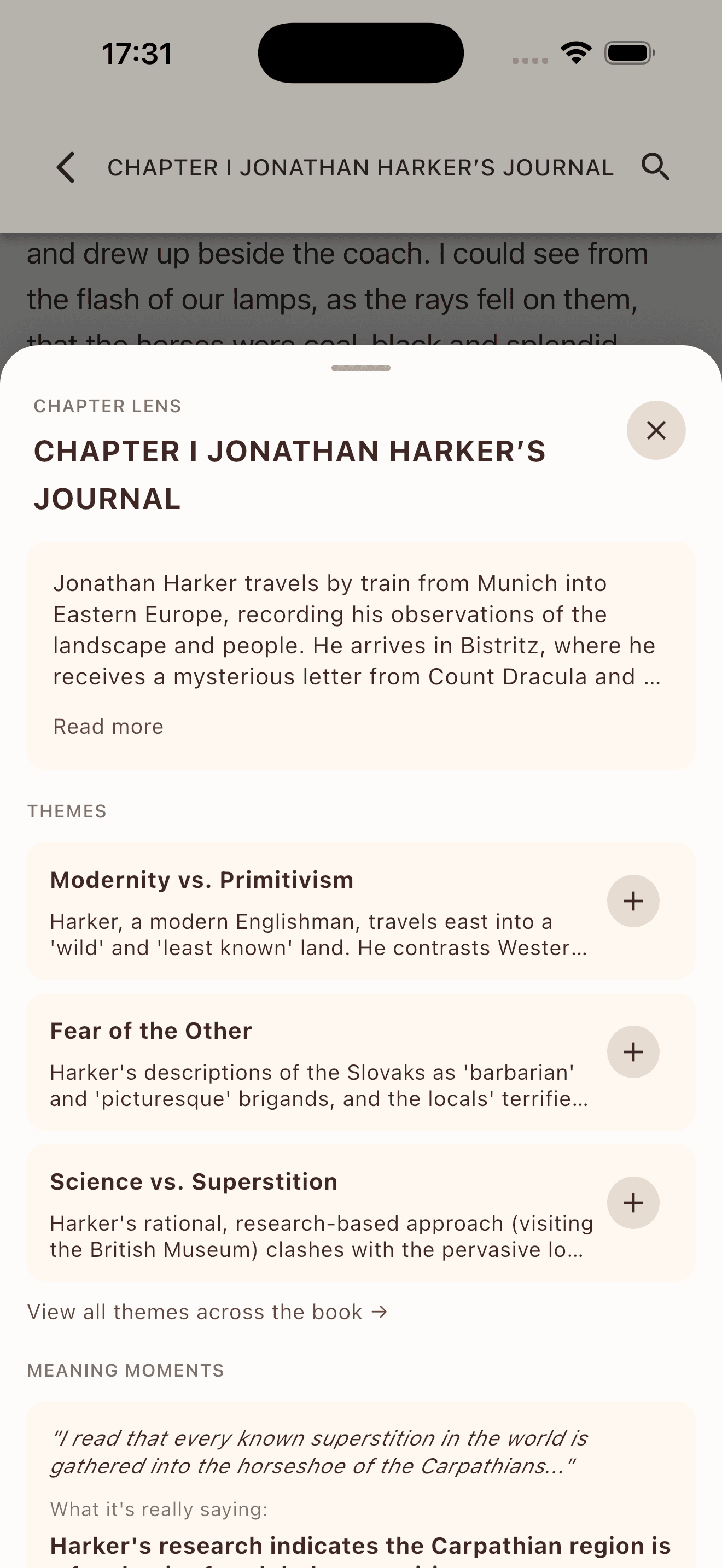
You don’t have to remember where it first appeared.
Themes surface as you read, with the next related moment a tap away.
Connections don’t depend on memory.
you stop
you search
you lose your place
you tap
you understand
you continue
Friction trains you to quit—not from laziness, but because each interruption makes starting again heavier.
When you don’t have to decide whether to stop and look something up, you often just keep going. Continuity turns into momentum.
Context-switching doesn’t just cost time—it costs the understanding you were in the middle of forming.
We’re not replacing reading with summaries.
We’re not simplifying the book so the difficulty disappears on a slide.
We’re not turning literature into another feed to consume.
We stay beside the text—available when you reach for help, quiet when you don’t.
Free to download. Scholar is optional.
Curated public-domain classics and your own ePub imports.
No. Guides sit beside the book, not instead of it.
Core reading works offline without one. Sync needs an account.
iOS now; Android and web in progress.
If reading has ever felt harder than it should, try reading without breaking your flow.